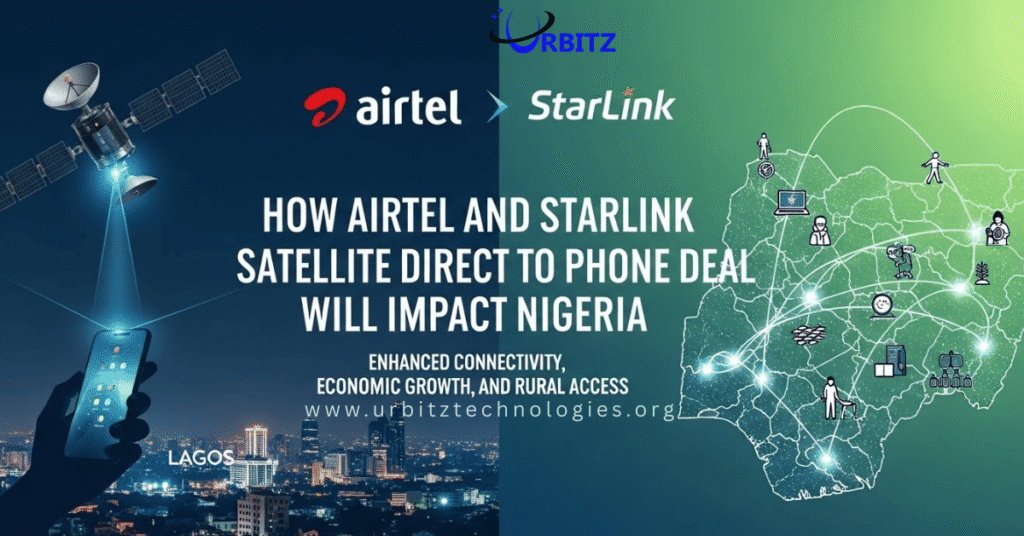
The recent announcement of a partnership between Bharti Airtel and SpaceX’s Starlink to provide satellite-based direct-to-phone services marks a potential turning point in global telecommunications. While initial focus is on India, Airtel’s significant presence in Africa—particularly through its Airtel Africa operations—raises important questions about how this technology might extend to markets like Nigeria. Let’s explore how this partnership could work and what it might mean for millions of users across multiple continents.
The Core Concept: Hybrid Networks for Emerging Markets
The Airtel-Starlink partnership aims to create a hybrid network combining Airtel’s terrestrial infrastructure with Starlink’s LEO satellites. What makes this particularly interesting is Airtel’s dual presence: as a dominant player in India and through Airtel Africa, which serves 14 African countries including Nigeria—its largest market with over 60 million subscribers.
Technical Architecture: Adaptable Across Regions
The technology remains fundamentally similar across regions:
- Satellite Layer: Starlink’s LEO satellites with cellular payloads
- Ground Infrastructure: Airtel’s local network integration
- Device Layer: Existing smartphones with software updates
The key regional difference will be spectrum allocation, as each country regulates airwaves differently.
The Nigeria Context: Why This Partnership Matters Here
Current Connectivity Challenges in Nigeria:
- Coverage Gaps: Approximately 30% of Nigeria’s landmass lacks reliable mobile coverage
- Security Concerns: Insurgency and kidnapping risks make tower maintenance dangerous in some regions
- Infrastructure Limitations: Fiber backbone challenges and power reliability issues
- High Costs: Current satellite solutions are expensive for average consumers
Airtel Africa’s Strategic Position:
- Market leader in several African countries
- Already investing in 5G rollout in Nigeria
- Strong brand recognition and distribution networks
- Experience with difficult terrains and infrastructure challenges
How It Might Work in Nigeria: A Practical Scenario
Step 1: Regulatory Approval
- NCC (Nigerian Communications Commission) would need to approve spectrum sharing
- NASRDA (National Space Research and Development Agency) would coordinate satellite operations
- Likely faster approval than in India due to Nigeria’s more flexible satellite regulations
Step 2: Infrastructure Integration
- Leverage existing Airtel Nigeria towers for ground stations
- Possibly collaborate with local partners like MainOne for terrestrial backhaul
- Integration with Airtel Africa’s existing data centers in Lagos
Step 3: Service Rollout
- Initial focus on the North-East and Middle Belt regions with coverage challenges
- Priority for security forces and emergency services in conflict zones
- Gradual expansion to maritime areas (Gulf of Guinea) and remote oil/gas facilities
Potential Benefits for Nigerian Users
For Rural Communities:
- Farmers in remote areas could access market prices and banking services
- Telemedicine could reach previously inaccessible communities
- Educational content delivery to remote schools
For Urban and Business Users:
- Backup connectivity during fiber cuts or power outages (common in Nigeria)
- Enhanced coverage for travel between major cities
- Improved connectivity for offshore operations and logistics
For National Development:
- Support for financial inclusion initiatives
- Enhanced disaster response capabilities
- Reduced digital divide between urban and rural areas
Unique Challenges in the Nigerian Context
- Regulatory Complexity: Multiple agencies with overlapping mandates
- Security Concerns: Ground station protection in volatile regions
- Affordability: Average revenue per user is lower than in India
- Device Compatibility: Higher percentage of feature phones versus smartphones
- Power Reliability: Need for solar-powered ground stations
Competitive Landscape in Nigeria
The partnership would face different competitors in Nigeria:
- MTN: Already experimenting with satellite partnerships in Africa
- Glo Mobile: May seek similar partnerships
- Traditional VSAT providers: More expensive but established solutions
- Project Kuiper: Amazon’s planned satellite service (future competitor)
Potential Rollout Strategy for Nigeria
Phase 1 (Pilot – 12-18 months after India launch):
- Limited service for government and enterprise clients
- Focus on security and emergency services
- Maritime connectivity in the Gulf of Guinea
Phase 2 (Commercial Launch – Year 2-3):
- Premium plans for business users and travelers
- Bundled offerings with existing Airtel Nigeria plans
- Integration with Airtel Money services
Phase 3 (Mass Market – Year 3-4):
- Affordable daily/weekly satellite data packs
- Emergency SOS features for all users
- Full integration with Airtel’s terrestrial network
Pricing Considerations for Nigeria
Given Nigeria’s lower ARPU compared to India:
- Likely Model: “Satellite minutes” as add-on to existing plans
- Emergency Use: Free basic SOS service (marketing advantage)
- Business Plans: Premium pricing for offshore and remote industrial use
- Government Subsidies: Potential for universal service fund support for rural coverage
Broader Implications for Africa
Success in Nigeria could trigger rapid expansion across Airtel Africa’s footprint:
- Similar challenges exist in Chad, Niger, Democratic Republic of Congo, Tanzania
- East African markets might see different applications (mountainous regions, island communities)
- Potential for pan-African satellite roaming agreements
What Nigerian Users Should Expect Realistically
Short Term (1-2 years):
- Limited availability, primarily for enterprise/government
- Basic text and emergency services first
- Higher costs than terrestrial data
Medium Term (3-5 years):
- Wider consumer availability
- Improved speeds and reliability
- Bundled offerings with terrestrial service
Long Term (5+ years):
- Potentially standard feature in premium plans
- Seamless switching between terrestrial and satellite
- Specialized applications for agriculture, mining, logistics
Conclusion: A Transformative Opportunity for Nigerian Connectivity
The Airtel-Starlink partnership represents more than just a technological innovation—it offers a potential solution to some of Nigeria’s most persistent connectivity challenges. While the Indian rollout will provide important lessons, the Nigerian application might prove equally significant given the country’s unique combination of vast geography, security challenges, and digital ambitions.
For Nigeria’s government, this technology could help meet national broadband plan targets. For businesses, it offers new possibilities in remote operations. For ordinary Nigerians, it promises to finally bring reliable connectivity to places where “network not available” has been a constant limitation.
The success in Nigeria will depend not just on technology, but on smart partnerships with local stakeholders, creative pricing models for price-sensitive markets, and a deep understanding of Nigeria’s unique challenges and opportunities.
Are you in Nigeria or another African market? How would satellite-direct-to-phone service change your connectivity experience? What challenges do you think need to be addressed first? Share your perspective in the comments!
Disclaimer: This analysis is based on available information about both companies’ strategies and general market conditions. Actual rollout plans, timelines, and services may vary based on regulatory decisions and technical developments.