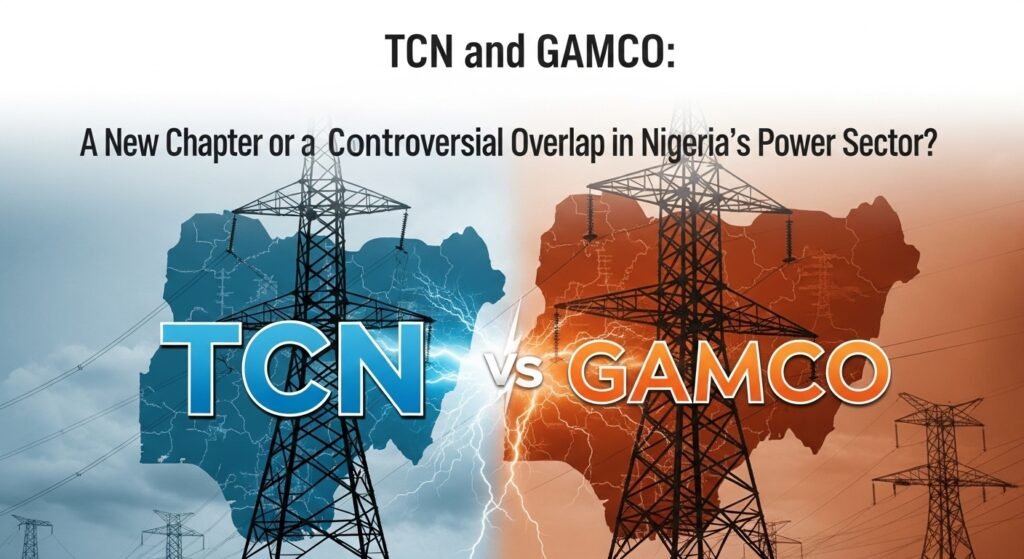
In a move that has sent ripples through Nigeria’s energy landscape, the Federal Executive Council (FEC) recently approved the establishment of the Grid Asset Management Company (GAMCO). This new entity is designed to tackle the nation’s persistent grid failures and blackouts. However, its creation has immediately raised a critical question: What is the relationship between GAMCO and the existing Transmission Company of Nigeria (TCN)?
This article unpacks the roles of TCN and GAMCO, explains the government’s rationale behind the new entity, and explores the controversies surrounding this significant structural shift.
The Core Entities: TCN and GAMCO Defined
To understand the relationship, we must first define the two players involved.
Transmission Company of Nigeria (TCN): The Incumbent Operator
The Transmission Company of Nigeria (TCN) is the current government-owned entity responsible for the bulk of electricity transmission across the country. It has traditionally held a dual mandate:
- System Operation: Managing the flow of electricity and dispatching power from generating companies (GenCos) to distribution companies (DisCos).
- Asset Management: Owning, maintaining, and expanding the transmission infrastructure (power lines, substations, and towers).
For years, TCN has been viewed as a critical bottleneck in the power sector, struggling with infrastructure decay, grid instability, and partial collapses, which have contributed to nationwide blackouts .
Grid Asset Management Company (GAMCO): The New Specialist
GAMCO is a newly approved entity created specifically to address Nigeria’s persistent national grid failures. According to government announcements, its purpose is to strengthen the electricity transmission value chain—an area the President has identified as a major bottleneck in the country’s power supply .
Unlike TCN’s broad mandate, GAMCO is positioned as a specialized asset manager. Its focus is singular: the direct management and maintenance of transmission grid infrastructure to prevent collapses and improve efficiency.
🔗 The Relationship: Unbundling vs. Duplication
The relationship between TCN and GAMCO is currently the subject of intense debate among power sector professionals. Here is how their interaction is intended to work versus how it is being perceived.
The Government’s Vision: Specialization and Efficiency
The government’s rationale for creating GAMCO is rooted in the principle of functional unbundling. The idea is to break down TCN’s monolithic structure into more focused, specialized entities.
Under this vision:
- TCN would likely retain its role as the System Operator, focusing on the real-time dispatch of electricity and grid stability.
- GAMCO would take over the Asset Management function, dedicated solely to owning, maintaining, and upgrading transmission infrastructure.
In theory, this separation allows each entity to focus on its core competency, potentially leading to better grid reliability and more efficient capital project execution. The government frames this as a critical step to address the transmission bottlenecks that have plagued the sector .
The Critics’ Concern: Overlap and Confusion
However, the announcement has been met with immediate skepticism from industry experts. The core criticism is that GAMCO duplicates the functions of existing agencies .
Key questions raised by stakeholders include:
- Redundancy with NISO: How will GAMCO’s role differ from the existing Nigeria Integrated System Operator (NISO)?
- The Fate of TCN: Will TCN be phased out, or will it operate side-by-side with GAMCO? What assets will GAMCO actually manage that TCN does not already manage?
- Regulatory Coherence: Is this new structure in accordance with the Electricity Act of 2023?
Dr. Joy Ogaji, CEO of the Association of Power Generation Companies (APGC), has publicly questioned the legal and operational basis for GAMCO, highlighting a lack of clarity around asset ownership and regulatory compliance .
The Human and Operational Impact
The TCN-GAMCO restructuring is not just a bureaucratic exercise; it has real-world consequences.
Job Security Concerns
Kunle Olubiyo, President of the Nigeria Consumer Protection Network, has warned that the creation of GAMCO could precipitate significant job losses within TCN . The human resource implications are severe: if GAMCO takes over asset management, what happens to the thousands of existing TCN staff currently performing those roles? In a sector already facing financial strain, this adds a layer of social tension to the structural reform.
Systemic Challenges Remain
Critics argue that creating GAMCO adds bureaucratic complexity without addressing the foundational issues crippling the sector . These include:
- Gas Supply Shortages: The recent drop in power generation has been attributed to a lack of gas supply to power plants.
- Liquidity Crisis: The sector remains entangled in a significant financial dispute over a reported N6.6 trillion legacy debt involving generation companies.
- Tariff Deficits: Unresolved issues with electricity tariffs continue to undermine the financial viability of the entire value chain.
Looking Ahead
The relationship between TCN and GAMCO is currently one of transition and tension. The government envisions GAMCO as a specialized solution emerging from TCN’s existing structure to fix the grid. However, stakeholders perceive it as a potential duplication of effort that creates confusion and threatens jobs .
Whether GAMCO becomes the solution to Nigeria’s grid failures or just another layer of complexity will depend on how the government answers the critical questions regarding role clarity, asset ownership, and regulatory compliance under the Electricity Act 2023.
For now, the power sector watches closely, hoping that this new structure leads to more lights on, rather than more bureaucratic red tape.