The significant price difference between Chinese and Western solar equipment inevitably raises a question: are you compromising quality for cost savings? This article offers an honest, experience-based comparison—focusing on quality, durability, performance, and value in Nigerian conditions—to provide you with the critical information needed for your next buy decision.
Importantly, the article also highlights the critical role of the installer and local support, factors essential for the long-term success of any option.
First, the Nigerian Reality Check
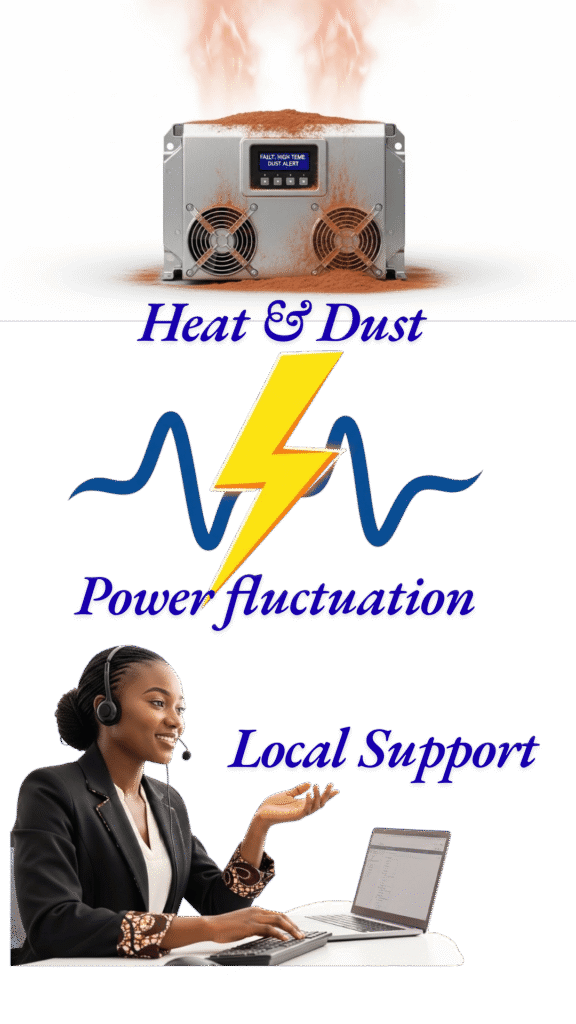
Before we compare brands, keep these three local factors in mind—they matter more than brand origin:
- Heat and Dust: Our weather is no joke. Equipment must survive temperatures over 35°C and Harmattan dust invasions.
- Power Fluctuations: When public power returns, voltage can dance between 90V and 250V. Your inverter must handle that rollercoaster.
- After-Sales Support: If something fails, can you find someone to fix it? Are spare parts available?
Now, with those in mind, let’s get into the details.
Solar Inverters: The “Translator” for Your Solar System
Think of the inverter as the “linguist” between your solar panels and your appliances—it converts solar DC into usable AC power. Here’s how the options stack up in our environment:
Western/European Brands (SMA, Victron Energy, Schneider Electric)
The “Western” Options – Reliable but Pricey
- Strengths: Excellent voltage fluctuation tolerance. Built like tanks—think “German engineering.” Brands like Victron are designed for tough environments (yes, that includes Nigeria’s grid moods).
- Nigerian Advantage: Superior surge protection for unstable grid power. Generally longer-lasting under stress.
- The Catch: Your wallet will feel it. A 5kVA European inverter can cost 2–3 times a comparable Chinese model. Spare parts? Rare and expensive.
- Best For: Businesses that depend on uninterrupted power (hospitals, data centres, large retail) or homeowners with generous budgets.
Chinese Brands (Growatt, Deye, MUST, Axpert)
The “Popular Kid” – Feature-Rich and Affordable
- Strengths: The price is very appealing. For the cost of one European inverter, you could buy two Chinese units. Many come loaded with features—built-in solar chargers, Wi-Fi monitoring, and more.
- Nigerian Reality: Quality varies widely. Some Chinese brands design specifically for African conditions (better cooling, dust filters). Others… well, let’s just say you get what you pay for.
- Best For: Most Nigerian homeowners—the value for money is hard to ignore. But only if you buy from an authorized, reputable dealer with a local service network.
- Pro Tip: Ask whether the brand has service centres in Lagos, Abuja, or Port Harcourt. MUST and Growatt, for example, have stronger local support than many others.
Nigerian Wisdom: For most households, a reliable Chinese hybrid inverter from a trusted dealer is the sweet spot. Make sure it uses modern MOSFET or IGBT transistor technology (which handles switching more efficiently) rather than older, less reliable thyristor-based designs.
Solar Batteries: Where Your Power Naps
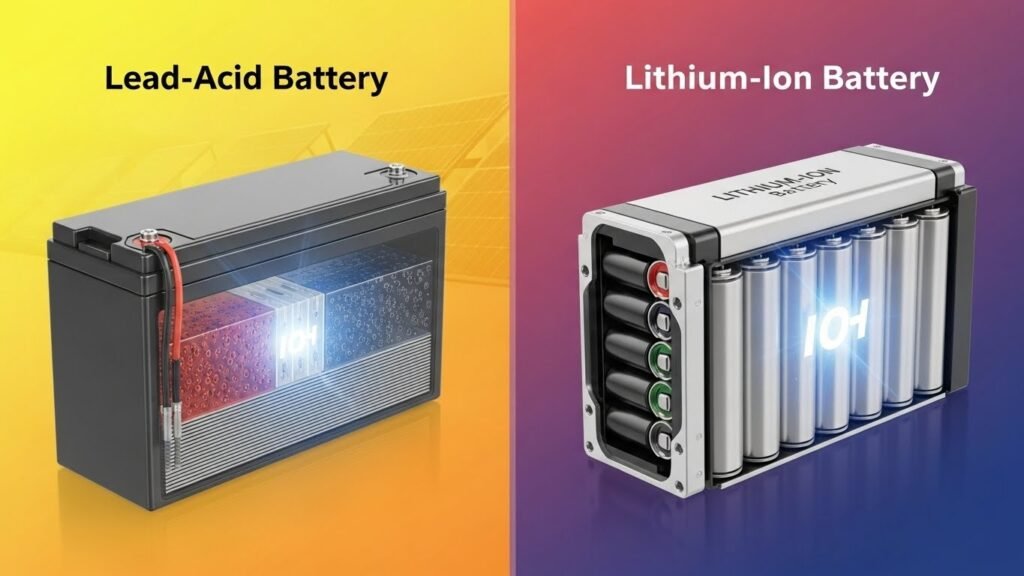
Batteries are where many solar plans succeed or fail. Choosing wisely is critical.
Western/Established Lead-acid Batteries (Trojan, Rolls, Vision)
The “Veteran” Option – Tried and Tested
- Strengths: Lead-acid chemistries are designed specifically for solar use. Handle heat better and last longer (5–8 years with good maintenance).
- Truth Talk: Even these struggle in Nigeria without proper maintenance. And the price? A 200Ah Trojan can cost ₦450k, while a Chinese alternative might be ₦180k.
- Best For: Those who aren’t counting pennies—larger projects, corporates, or anyone who prioritizes lifespan over upfront cost. Important to note that , on a cost basis, many of these western Lead-acid options can now be easily replaced with Chinese LifePO4 offerings.
Chinese Lead-acid and Lithium Batteries (Narada, BSL, Leoch, and many locally branded Chinese cells)
The “Market Darling” – Affordable but Beware
- Strengths: Price and availability. You can find these everywhere from Alaba to Computer Village.
- Game Changer: LiFePO4 (Lithium) batteries from China—brands like BYD, Pylontech. Yes, the premium brands cost a bit more upfront than lead-acid, but they last 10+ years, need zero maintenance, and handle heat better. Long-term, they’re actually cheaper! Plus, cheaper brands now exist that cost virtually same as entry level lead acid batteries.
- Best For: Everyone—but you must buy from authorized dealers and ask for test reports.
The Maintenance Factor – Nigeria Edition
- Dust is a silent killer. Inverters with good air filtration have the edge.
- Heat cuts lead-acid battery life in half for every 10°C above 25°C. Install batteries in a cool, ventilated space.
- Voltage spikes from the grid can fry electronics. Always use a quality surge protector—not just a stabilizer.
The Installer matters more than the brand

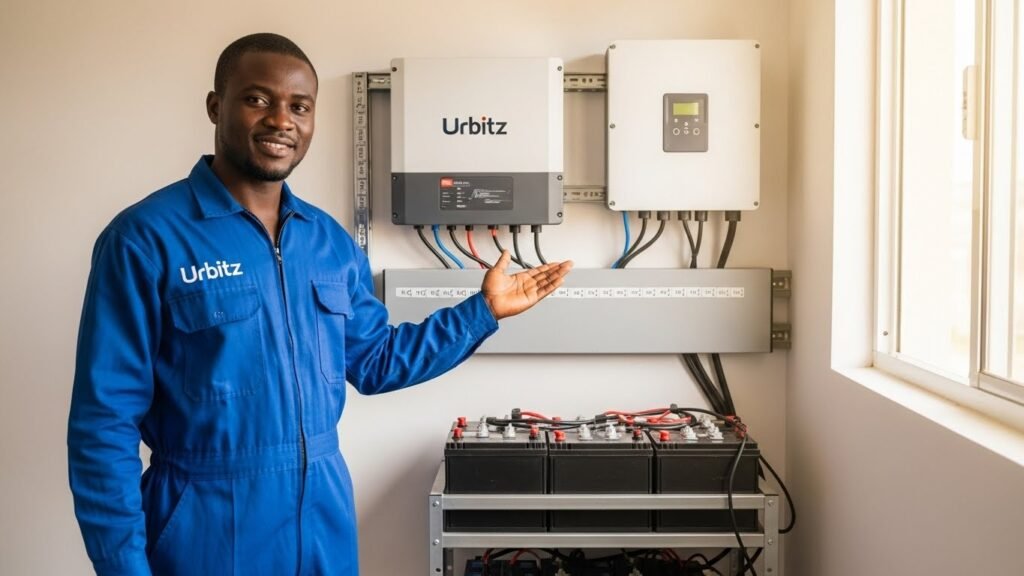
Realise this:
A ₦5 million European system installed poorly will fail.
A ₦2 million Chinese system installed by a pro will run for years.
It is instructive to vet your installer against this checklist. They must:
- Understand the product to be installed.
- Understand load balancing (how to connect fridge, AC, TV without drama).
- Use the right cables (4mm or 6mm for battery connections—not that flimsy 2.5mm “wire”).
- Provide and install protective devices properly: Protection costs a fraction of the rest of the system but means the system serves you safely and for longer. These are usually either not added or taken off when the customer is overly price conscious.
- Provide a written warranty on their workmanship, not just the product warranty.
Practical Decision Guide for Nigerian Households
If your intended use is mission critical and you have the budget:
- Inverter: Quality Chinese hybrid (Growatt, Huawei) or specialized brand (Victron if in a high-stress area).
- Batteries: Seriously consider LiFePO4. If that’s too steep, go for quality tubular lead-acid batteries.
- Expected lifespan: 8–10 years with care.
If your intended use scenario is less critical and there is a budget constraint:
- Inverter: Chinese hybrid from an authorized dealer.
- Batteries: Avoid cheap “dry cell” batteries. Choose reputable tubular lead-acid (labelled “deep cycle” or “solar battery”).
- Expected lifespan: 5–8 years with good maintenance.
If you’re powering a business:
- Inverter: Invest in European brands (Schneider, Victron) for reliability.
- Batteries: Go lithium to minimise downtime and maintenance.
- Think of it as a capital investment—calculate your return properly.
Final Verdict for Nigeria
- For 80% of homes: A quality Chinese hybrid inverter + reputable batteries (lead-acid or lithium) + professional installation = Winner.
- European brands still lead in extreme conditions (e.g., industrial areas with terrible power) if the budget allows.
- The future is Lithium (LiFePO4) batteries—and for value, Chinese brands make the long-term math undeniable.
- Your installer’s reputation > Brand reputation in Nigeria.
Questions to Ask BEFORE You Pay
- “Where is your service centre?”
- “Can I see your last three installations?”
- “What’s included in the installation? (cables, connectors, mounting)”
- “What’s NOT covered in the warranty?”
- “How do I maintain this system monthly?”
Remember: Solar is an investment, not an expense. The cheaper option that fails in one year is ultimately more expensive than the quality option that lasts five.
What do you think? Have you tried solar before? Share your experience in the comments—let’s learn from each other. Questions? Drop them below!
Brought to you by Urbitz Technologies– Helping Nigerians make smart solar decisions.
1 thought on “Western vs Chinese Solar Brands: The Honest Guide for Nigerian Homes (Beyond the Price Tag)”
This article is very interesting