Power to the Few? The Hard Truth About NERC’s New Net Billing Scheme
If you’ve been scrolling through Nigerian Twitter or WhatsApp groups recently, you might have seen the excitement: “NERC will now pay you for solar power!” Headlines promised a future where your rooftop turns into a mini power plant and your electricity bill shrinks to nothing.
It sounds revolutionary. But after digging into the fine print of the soon-to-commence NERC Net Billing Scheme, a less exciting picture emerges. The reality is that this policy is not designed for the average Nigerian homeowner. Not even close.
Here is the hard truth about who really gets to benefit—and who gets left behind.
The 50kWp Elephant in the Room
Let’s start with the most important number: 50kWp.
That is the minimum installed capacity required to participate in the net billing scheme as a prosumer (someone who both consumes and exports power). To put that in perspective:
- A typical Nigerian home with a fridge, TV, fans, and a few lights might need 1.5kWp to 3kWp of solar.
- A small office or boutique might need 5kWp to 10kWp.
- 50kWp is a commercial-scale installation. Think: a large church auditorium, a secondary school with multiple classrooms, a small factory, or a sprawling hospital.
For a residential homeowner, 50kWp is like needing a luxurious bus to commute to work. It is oversized, overpriced, and completely impractical. The cost? A standard-compliant 50kWp solar system with batteries, inverters, and proper mounting structures currently runs between ₦50 million and ₦100 million (or more, depending on component quality).
That is not a home improvement. That is a capital project.
What This Means for Churches and Schools (The Real Winners)
This scheme is actually a massive opportunity for organized, asset-owning institutions. Large churches, mosques, private schools, universities, and hospitals have three advantages:
- Roof space: They have large, often flat rooftops that can accommodate dozens of panels.
- Daytime usage: Schools and churches use significant power during daylight hours, which aligns perfectly with solar generation.
- Access to funding: Unlike individual homeowners, these organizations can access cooperative loans, development bank funding, or even member donations to finance a ₦70 million installation.
For a large church that currently spends ₦2 million monthly on diesel for a generator, moving to solar plus net billing could cut operating costs dramatically. They can power their services, run their office, and export excess energy back to the DisCo for credits on slow days.
The scheme rewards institutions with capital and scale. The benefit for the working class family is not as direct.
The Hidden Barrier: Standard-Compliant Installation
Even if an organization can afford the 50kWp system, there is a second gate they must pass: standards-based installation.
NERC’s regulations require that the embedded generation facility (your solar setup) must be installed by accredited engineers using approved components that meet Nigerian or international standards (IEC, SON, etc.). This means:
- Certified solar panels (not the cheap, second-hand panels common in many local markets)
- Approved inverters with grid-interactive capability (anti-islanding protection, voltage and frequency compliance)
- Proper protection devices (surge arrestors, disconnection switches)
- Professional engineering design and stamping
Here is the problem: The majority of solar installations in Nigeria today—even many large ones—are not fully compliant. They use budget inverters not designed for grid interconnection. They lack proper protection. They were installed by technicians who understand off-grid systems but not grid-tied, bi-directional power flow.
Bringing an existing system up to code can cost millions of naira in retrofits alone. For many churches and schools that already stretched their budget to get some solar, the additional cost of compliance is a dealbreaker.
The Uncomfortable Reality
Let me spell out the three groups this scheme creates:
| Group | Can they participate? | Why? |
| Residential homeowners | ❌ No | 50kWp minimum is unaffordable and impractical |
| Small businesses | ❌ No | Same reason—scale and cost are out of reach |
| Large churches, schools, hospitals, factories | ✅ Possibly | If they have capital and can afford compliant installation |
| Wealthy estates / luxury housing complexes | ✅ Possibly | If they pool resources and install a shared 50kWp+ system |
So the net billing scheme is not a mass-market consumer policy. It is a commercial and institutional policy dressed in consumer-friendly language.
What This Means Moving Forward
For the average Nigerian, the message is disappointing but clear: Do not rush to install solar expecting net billing credits. You will not qualify unless you install a system many times larger than your home needs.
For churches, schools, and businesses, the calculation is different. If you already have a large electricity bill (₦500,000+ monthly) and you have the roof space, you should begin:
- Contacting your DisCo for their specific net billing connection requirements.
- Getting a quote from an accredited solar installer (look for NABCEP or COREN certified engineers).
- Budgeting not just for the panels, but for the full compliant system—protection devices, meters, and grid interconnection hardware.
For policymakers, this reveals a gap. A lower tier (e.g., 5kWp to 10kWp) for residential prosumers would open the scheme to millions of Nigerians. Without that, net billing remains a niche policy for the already wealthy and well-organized.
The Bottom Line
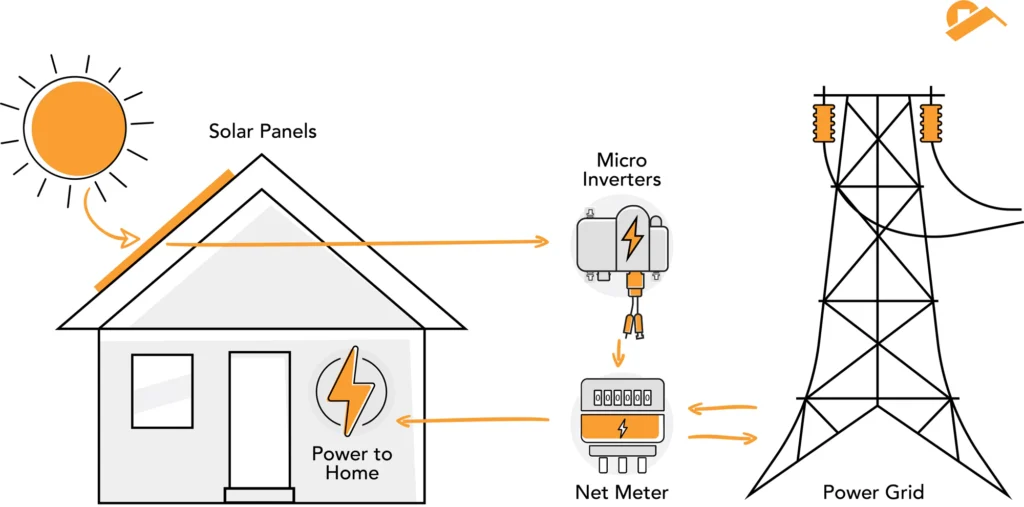
Net billing is a step forward for Nigeria’s energy transition. But right now, it is a step that only large institutions can take. The 50kWp minimum, combined with the high cost of standard-compliant installation, means the average homeowner or small business owner will continue to rely on generators or off-grid solar—without any credit from the DisCo.
Don’t let the headlines fool you. This scheme is not for the people with small roofs. It is for the people with large balance sheets.
Are you part of a church, school, or business considering net billing? Or are you frustrated that residential homes were left out? Share your thoughts below.